AI SearchArticle6 min read
AEO vs GEO vs traditional SEO: what digital marketers should actually prioritise in 2026
Answer engine optimisation, generative engine optimisation and SEO are less separate than the acronyms suggest. Here is what each means and where to start.

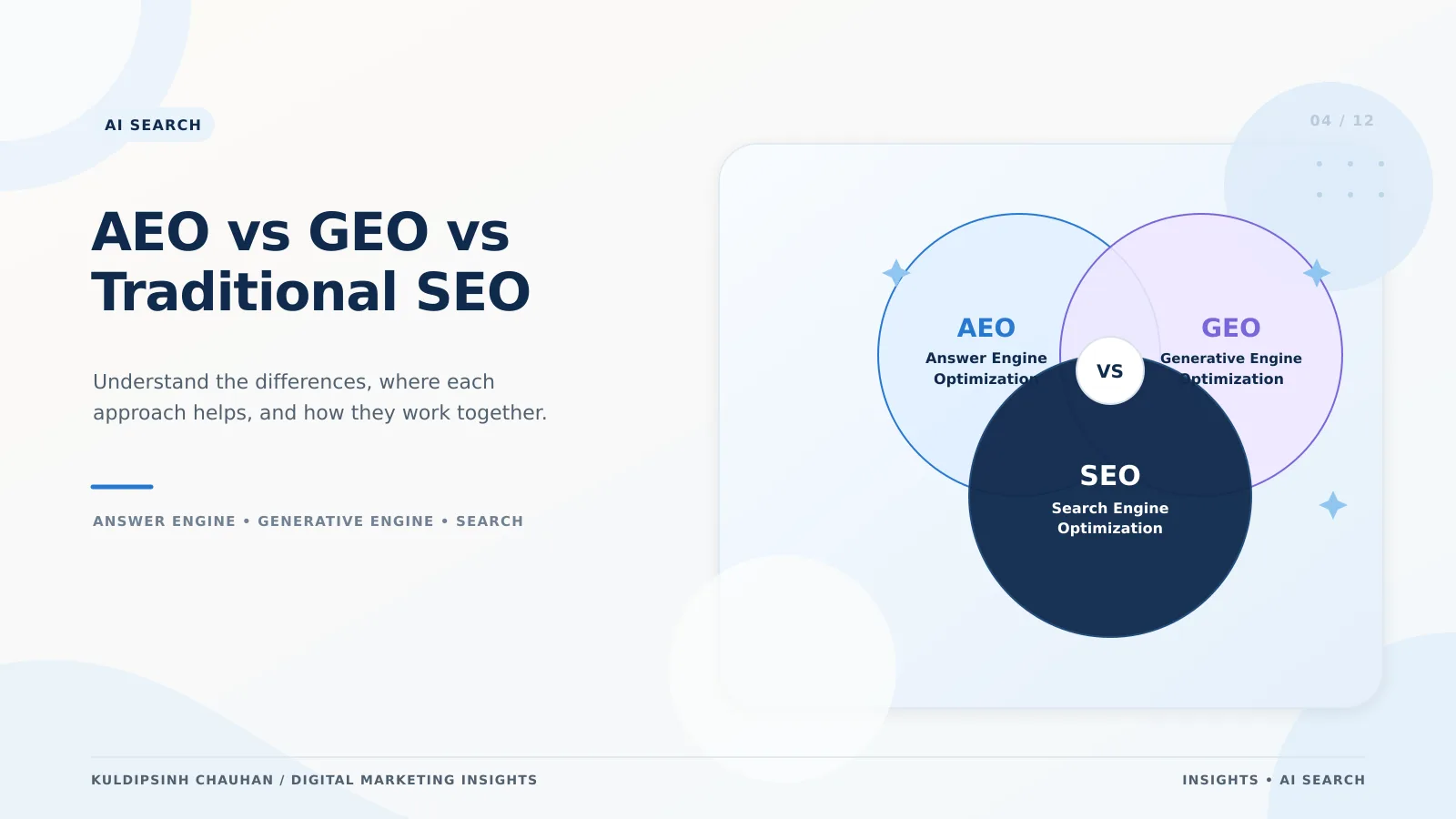
What each one focuses on
Traditional SEO
- Goal: rank pages for queries and earn clicks.
- Levers: technical health, relevance, links, page experience.
- Measured by: rankings, impressions, clicks and conversions in Search Console and analytics.
AEO
- Goal: become the direct answer to a specific question.
- Levers: question-led headings, concise answers at the top of sections, lists and tables where they help.
- Measured by: featured snippets, People Also Ask visibility, voice answers.
GEO
- Goal: be cited or recommended inside generated answers.
- Levers: original facts and data, clear entity information (who you are, what you do, where), consistent mentions across trusted sites, crawler access.
- Measured by: AI feature impressions in Search Console, referrals from AI assistants in GA4, manual prompt checks.
Where they conflict - and where they do not
Real conflicts are rare. The main tension is click-through: a perfectly self-contained answer may satisfy the reader without a visit. The answer is to give the short answer and keep the depth - examples, tools, numbers and next steps - on the page.
Another tension is crawler access. Some site owners block AI crawlers for licensing reasons, which can reduce visibility in those tools. That is a business decision, explained further in making your website discoverable by AI search.
A practical priority order for 2026
- Fix eligibility. Pages must be crawlable, indexable and allowed to show snippets. Use the technical SEO audit checklist.
- Answer first. Rewrite key sections so the first two or three sentences answer the heading's question directly.
- Add substance. Include specifics that only you can provide: process, pricing ranges, timelines, results with context.
- Clarify the entity. Keep your name, services, location and profiles consistent on your site, author page, and directory listings, with matching structured data.
- Earn mentions. Independent reviews, interviews, directory profiles and client case studies give AI tools confirming sources.
- Measure and iterate. Track AI impressions, AI referrals and branded search alongside classic SEO metrics.
What not to spend time on
- Hidden text or keyword blocks written 'for AI' - they break search guidelines and add no value.
- Invented statistics to look quotable; AI systems and readers increasingly cross-check claims.
- Separate 'AI versions' of pages. One clear, well-structured page serves people, search engines and AI tools.
For the bigger picture of how search results are changing, see SEO in the AI search era.
How this looks on a local business site
For a local studio, the same principles apply on a smaller scale: a complete Google Business Profile, one clear page per service and area, and real reviews. For Raj Shah Designs this classic local SEO work led to #1 Local Pack positions for 12 commercial terms and +340% calls from Google Business Profile - the kind of consistent, verifiable footprint that AI tools also rely on.
How to measure each approach
Because the three overlap, it helps to keep a single scorecard rather than separate reports that compete for attention.
- SEO: organic clicks, impressions and key events from organic search for priority pages in Search Console and GA4.
- AEO: whether priority questions show your page in featured snippets or People Also Ask; track a fixed list of queries monthly.
- GEO: impressions in the Generative AI performance report, sessions referred by AI assistants in GA4, and a monthly manual check of 10 to 20 real customer prompts across the tools your audience uses.
- Brand: branded search impressions and direct enquiries that mention AI tools or search.
Review the scorecard quarterly. If one area lags, look at the pages involved rather than starting a separate programme. Usually the fix is the same: clearer answers, better evidence and fewer technical barriers.
Be careful with tools that claim to measure 'AI rankings' precisely. AI answers vary by user, location, wording and time, so treat any single snapshot as a sample, not a position.
Frequently asked questions
- Is GEO replacing SEO?
- No. Generative tools mostly retrieve pages that already perform well in search. GEO adds a few emphases - entity clarity, citations and crawler access - on top of SEO.
- Do I need an llms.txt file for GEO?
- It is optional and experimental. It may help some tools, but it is not a Google ranking factor and does not guarantee citations.
- How do I know if AI tools mention my brand?
- Check Search Console's Generative AI performance report, AI assistant referrals in GA4, and run a regular set of real prompts in the tools your customers use.
References and further reading
- AI features and your website - Google Search Central
- Featured snippets and your website - Google Search Central
- Creating helpful, reliable, people-first content - Google Search Central
- AEO
- GEO
- SEO
- AI Search
Related case studies
Want this applied to your brand?
Let's Talk