AI SearchArticle6 min read
AI-generated content and SEO: how to scale without sacrificing originality, accuracy or trust
Google does not penalise content for being made with AI - it targets content made to manipulate rankings. Here is a workflow that keeps quality high.

What Google actually says
In February 2023 Google published guidance stating that it focuses on the quality of content rather than how it is produced. Using automation, including AI, to generate content with the primary purpose of manipulating rankings is a violation of its spam policies.
In March 2024 Google expanded this with the scaled content abuse policy: producing many pages primarily to rank, with little originality or value, is spam regardless of the method. The test is purpose and value, not the tool.
Where AI helps - and where it hurts
Good uses
- Summarising research you have gathered and checked.
- Suggesting outlines, questions to answer and gaps against competing pages.
- First drafts of routine sections that you then rewrite with specifics.
- Editing for clarity, consistency and reading level.
- Generating alt text or meta description drafts for human review.
Risky uses
- Publishing unedited drafts at volume.
- Letting a model supply statistics, dates or citations you have not verified.
- Writing 'first-hand' experience that did not happen.
- Creating near-identical location or product pages with swapped keywords.
An editorial workflow that scales
- Brief: define the reader, the search intent, the single main question and what original input you will add (data, process, examples).
- Research: collect sources first - official documentation, your own analytics, client results with permission.
- Draft: use AI to structure and draft from that material, not from its general knowledge.
- Add experience: the subject expert adds the steps, judgement calls and lessons only they know.
- Fact-check: verify every number, date, name and link against the source.
- Edit: cut filler and repetition, make headings descriptive, lead with answers.
- Publish and maintain: show author and dates, then review on a schedule.
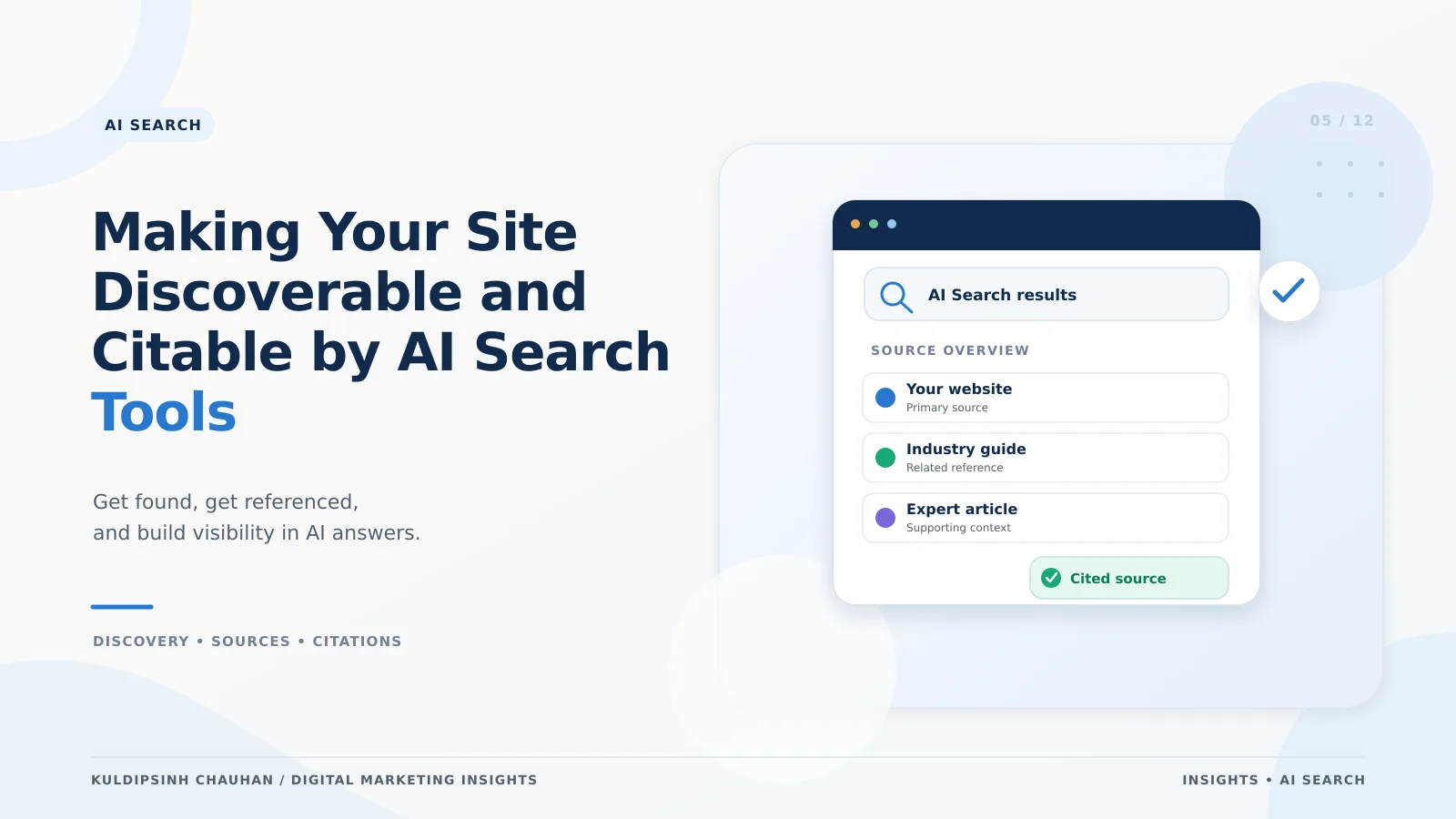
This is the same quality bar that makes content quotable for AI search tools, discussed in making your website discoverable by AI search.
Signals of trust readers and search engines look for
- A named author with a real profile and relevant experience.
- Clear sourcing for factual claims, with links to the original.
- Results presented with context: client type, period, what was measured.
- Honest labelling of hypothetical examples and estimates.
- Visible publication and update dates.
Google's guidance asks creators to consider 'Who, How and Why': who created the content, how it was produced, and why it exists. If automation was a substantial part of how, saying so can build trust.
Measuring whether scaled content is working
Do not judge success by page count. Watch indexing rates in Search Console, engagement and key events in GA4, and whether pages earn links or citations. If many new pages sit in 'Crawled - currently not indexed', quality or duplication is likely the issue - see the technical SEO audit checklist.
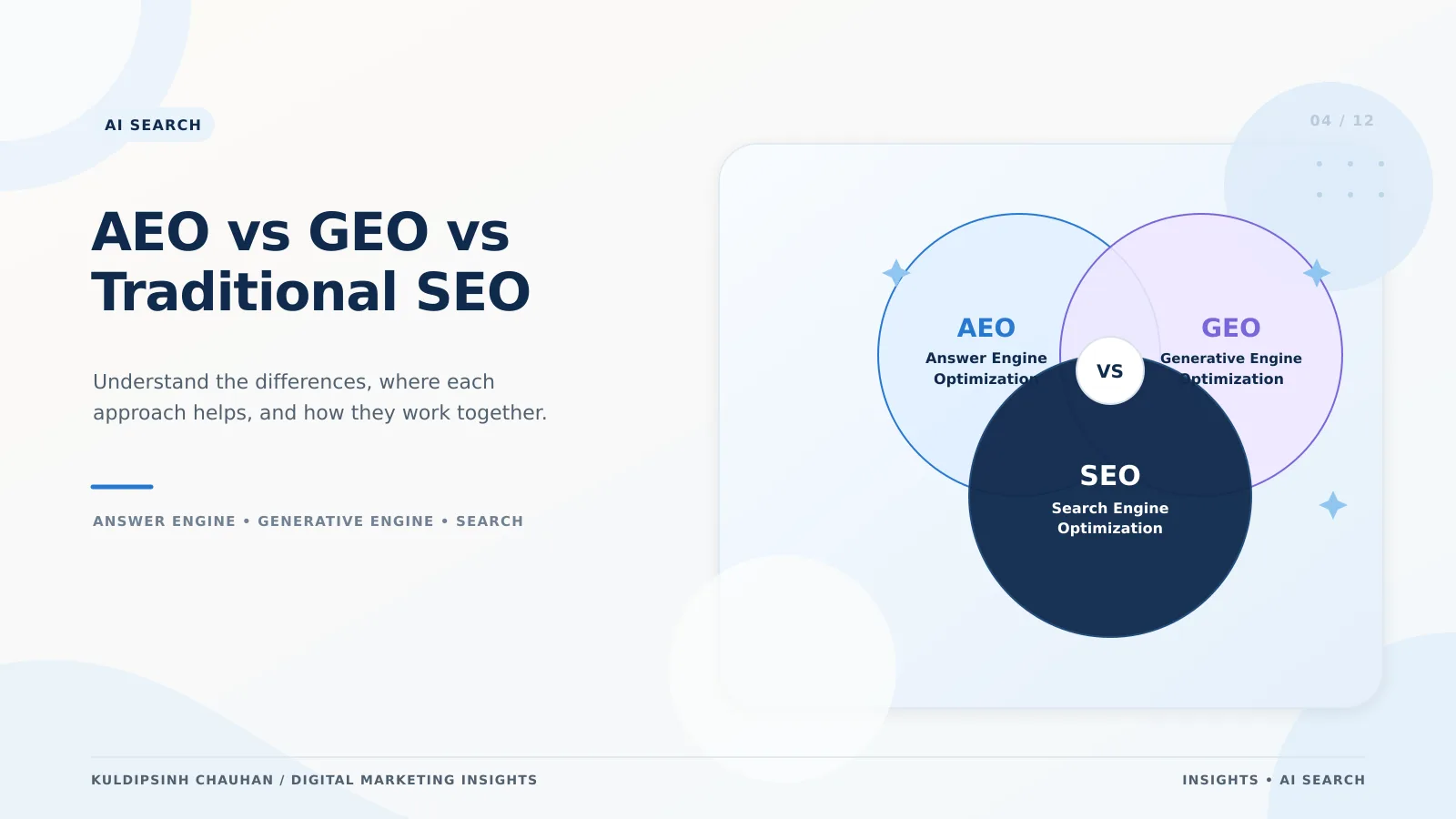
A smaller number of well-researched articles almost always beats a large batch of interchangeable ones, both in search and in AI answers. The distinction between optimisation approaches is explained in AEO vs GEO vs traditional SEO.
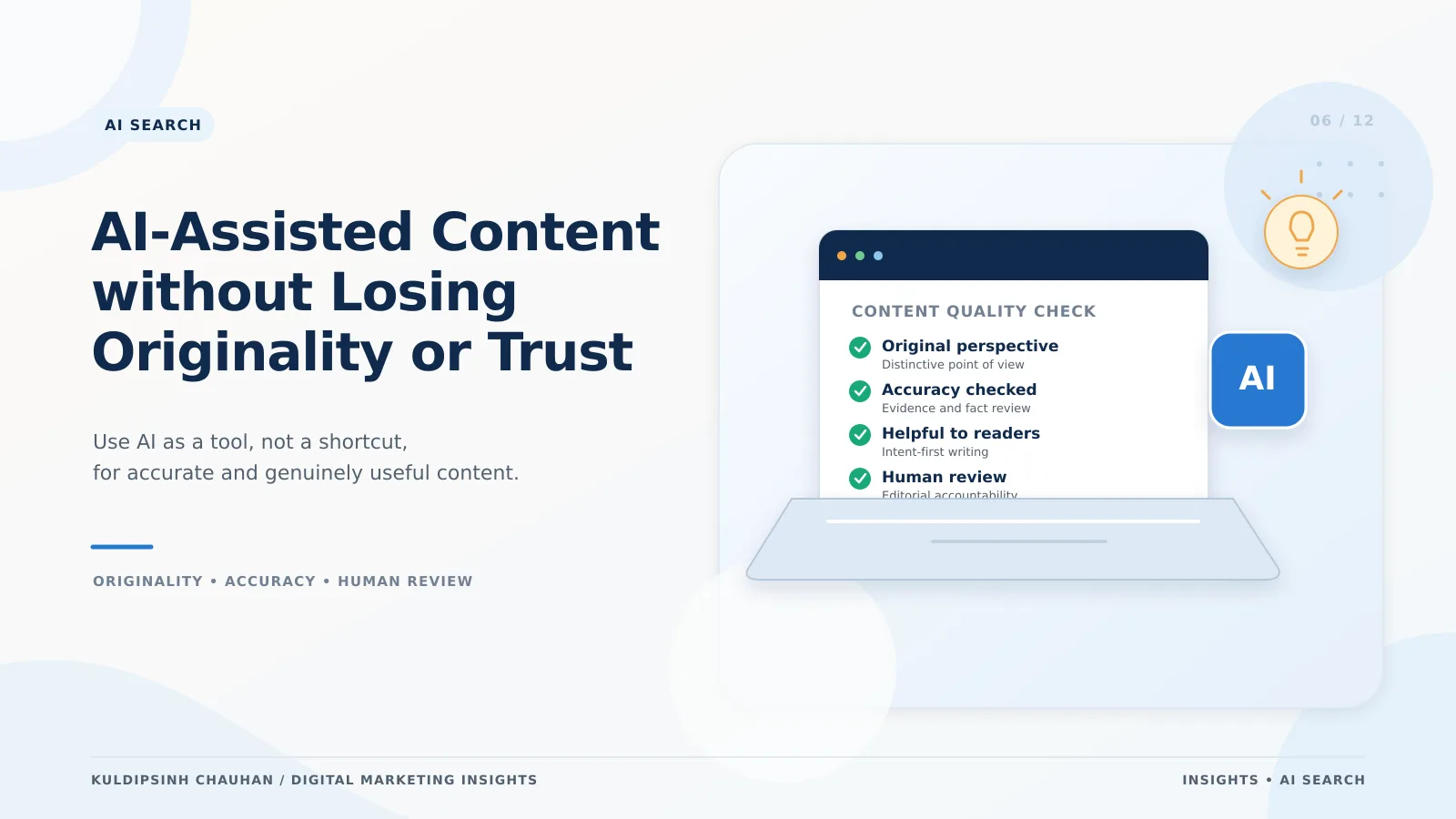
A pre-publish quality checklist
Use this list before any AI-assisted page goes live. If the answer to any question is no, the page is not ready.
- Does the page answer a real question a customer asks, better than the current top results?
- Has a person with relevant experience added something a model could not - process, judgement, examples or data?
- Has every statistic, date, name and quote been checked against its original source?
- Are hypothetical examples clearly labelled as such?
- Is the author named and linked to a profile?
- Are headings descriptive and is the main answer near the top?
- Would you be comfortable if a client or competitor read it closely?
- Is there a plan and an owner for updating it?
Teams that apply a checklist like this usually publish less but see a higher share of pages indexed, linked and cited. That trade is worth making.
Keep the checklist inside the brief template so writers, editors and subject experts all see it before work starts, not after.
Frequently asked questions
- Does Google penalise AI-written content?
- Not for being AI-written. Google targets content created primarily to manipulate rankings or produced at scale with little value, whatever the method.
- Should I label content as AI-assisted?
- Google suggests disclosing automation where readers would reasonably expect it. A short note on how content is produced and reviewed is a good practice.
- Can AI content rank well?
- Yes, when it is accurate, original in substance and genuinely helpful. The human research, experience and editing usually make the difference.
References and further reading
- Google Search's guidance about AI-generated content - Google Search Central Blog
- Spam policies for Google web search (scaled content abuse) - Google Search Central
- Creating helpful, reliable, people-first content - Google Search Central
- AI Content
- Content Strategy
- E-E-A-T
Want this applied to your brand?
Let's Talk