Performance MarketingGuide6 min read
Meta Ads vs Google Ads: how to allocate budget across awareness, traffic and lead generation
Google captures demand that already exists; Meta creates demand people did not know they had. Here is how to split budget between them.

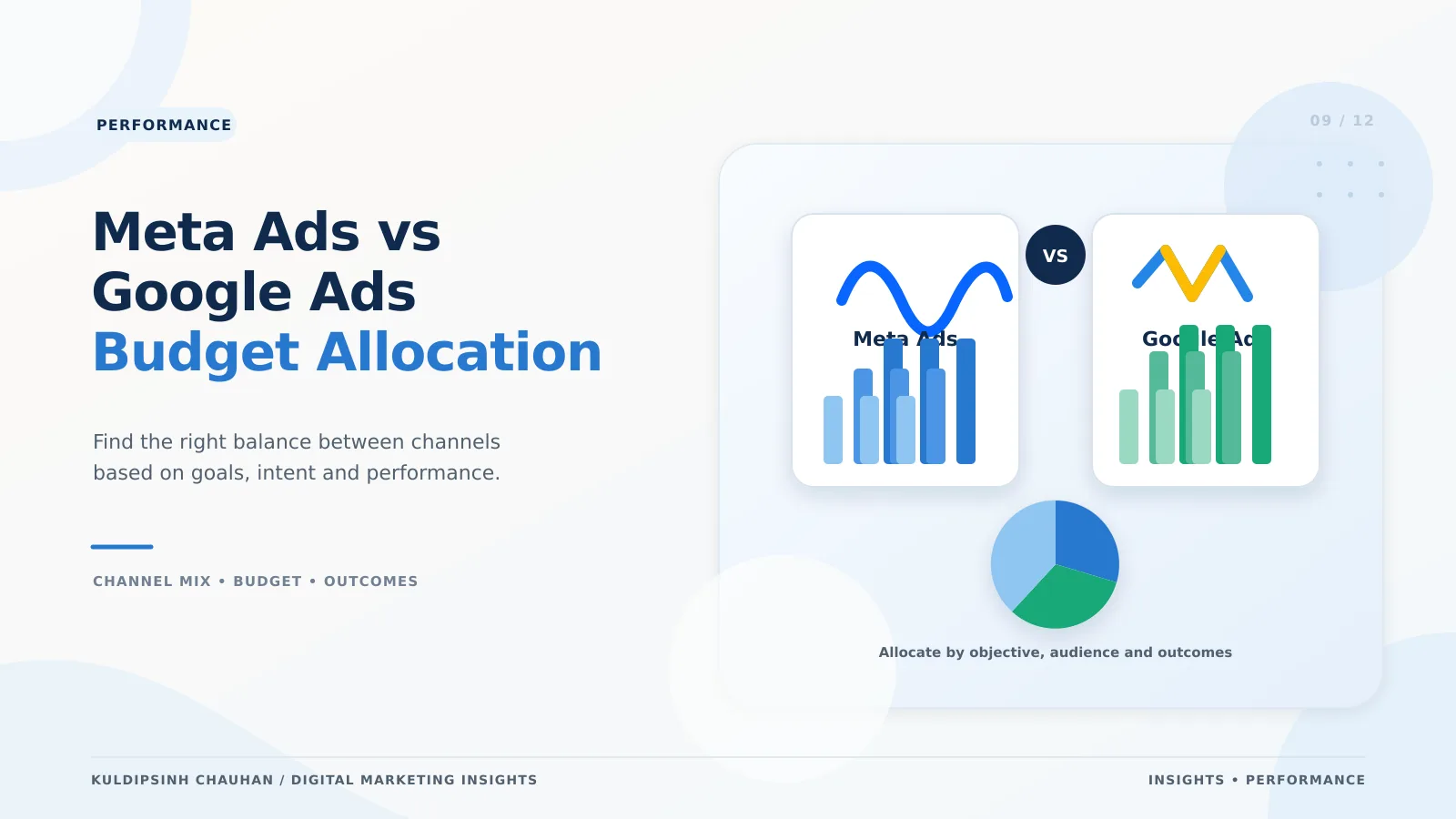
How the two platforms differ
Google Ads
- Intent-led: search queries show what people want right now.
- Strong for high-intent services, products people search for by name or category, and local services.
- Also offers YouTube, Demand Gen and Display for earlier-stage reach.
Meta Ads (Facebook and Instagram)
- Discovery-led: ads appear in feeds, Stories and Reels based on audience signals.
- Strong for visual products, impulse and lifestyle purchases, new categories and building audiences for retargeting.
- Lead forms let people enquire without leaving the app, which can raise volume but needs quality checks.
Match objectives to funnel stage
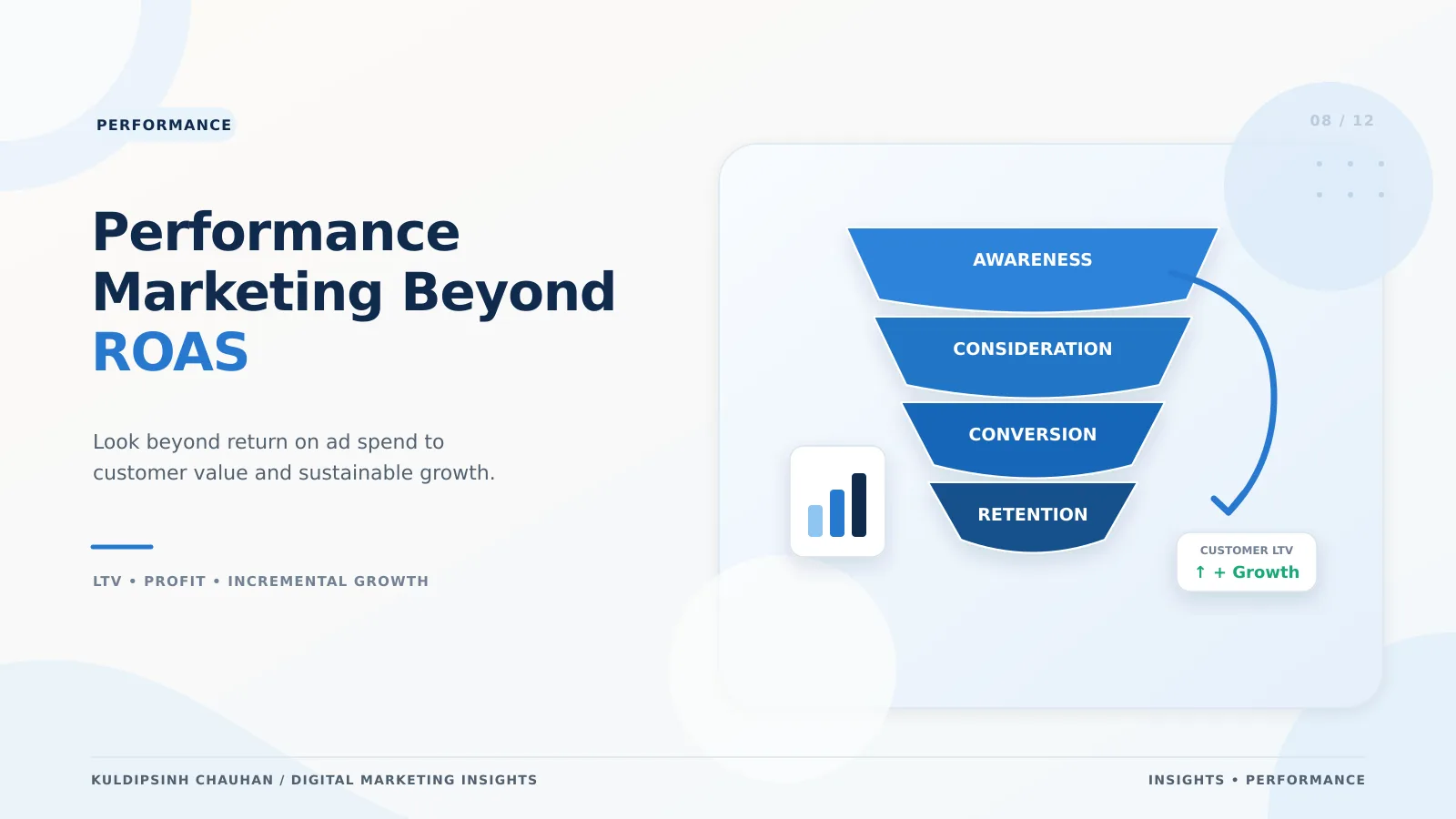
- Awareness: Meta reach or video views, YouTube - measured by reach, cost per thousand, video completion and later branded search lift.
- Traffic and consideration: Meta traffic or engagement, Demand Gen - measured by landing page views, engaged sessions and add-to-carts.
- Leads and sales: Google Search and Shopping, Performance Max, Meta conversion campaigns - measured by cost per qualified lead, CAC and margin.
Choose the campaign objective for the outcome you actually want. Optimising for clicks will find clickers, not buyers.
A starting allocation framework
- Estimate search demand. Use Keyword Planner to see how much relevant search volume exists in your markets.
- Fund search to capture it profitably, up to the point where extra spend stops producing conversions at your target CAC.
- Put the remaining budget into Meta prospecting and retargeting, and YouTube or Demand Gen if video assets exist.
- Hold back a test budget (often 10-20%) for new audiences, creative and formats.
Illustrative example only: a local service with strong search demand might start around 70% Google / 30% Meta, while a new fashion brand with little search demand might start nearer 30% Google / 70% Meta. Real splits should come from your own data.
Rebalancing with marginal returns
Average ROAS tells you how a channel has performed; marginal return tells you what the next increment of budget will do. Increase a channel's budget in steps and watch whether CAC holds. When it rises above target, the channel is approaching saturation and budget is better spent elsewhere.
Judge with consistent metrics across channels, as explained in performance marketing beyond ROAS.
Measurement that keeps both honest
- Install the Meta Pixel and Conversions API, and Google tag with enhanced conversions, so both platforms see server-side and consented data.
- Use UTM parameters consistently and compare platform-reported results with GA4 and CRM data.
- Watch branded search volume when Meta spend changes - awareness often shows up as more brand searches.
- Run lift or geo tests periodically to check incrementality.
Tracking setup details are in the GA4 conversion tracking guide.
Common allocation mistakes
- Judging Meta prospecting by last-click results and cutting it, then watching retargeting and brand search dry up.
- Spending heavily on brand search that would convert organically anyway.
- Running Meta lead forms without filtering for quality.
- Changing budgets every day before either platform has learned.
Creative and landing pages decide the split too
Budget follows performance, and performance on both platforms depends heavily on creative and landing pages.
- On Meta, creative is the main targeting lever. Test several concepts - problem, demonstration, testimonial, offer - and refresh them before fatigue sets in.
- On Google Search, ad copy should mirror the query and the landing page should answer it immediately.
- Use landing pages built for each intent: a product or service page for high intent, a guide or lookbook for discovery traffic.
- Make the next step obvious on mobile, where most social traffic arrives.
If one channel underperforms, check creative and landing page fit before cutting its budget. A weak page can make a good channel look bad.
Review the split monthly with the same scorecard for both channels, and quarterly with an incrementality test where budgets allow.
Frequently asked questions
- Which is better, Meta Ads or Google Ads?
- Neither is better in general. Google is stronger where people already search for what you sell; Meta is stronger for creating demand and reaching people visually. Most businesses benefit from both in different roles.
- How much should a small business spend on each?
- Start where demand is clearest - usually Google Search for services people look for - and add Meta once tracking works and you have creative to test. Scale whichever channel delivers qualified leads at your target cost.
- Why do Meta and Google both claim the same sale?
- Each platform uses its own attribution and counts conversions it influenced. Use GA4 or CRM data and blended metrics to avoid double counting.
References and further reading
- About Keyword Planner - Google Ads Help
- About the Conversions API - Meta for Developers
- Turn discovery into action with September's Demand Gen Drop - Google Ads & Commerce Blog
- Meta Ads
- Google Ads
- Budget Allocation
- Paid Media
Want this applied to your brand?
Let's Talk