Google AdsGuide7 min read
Google Ads in 2026: automation, Smart Bidding, first-party data and conversion quality
Automation now makes most bidding and targeting decisions. Your advantage comes from the signals you feed it - conversion quality, values and first-party data.

What automation does - and what it still needs from you
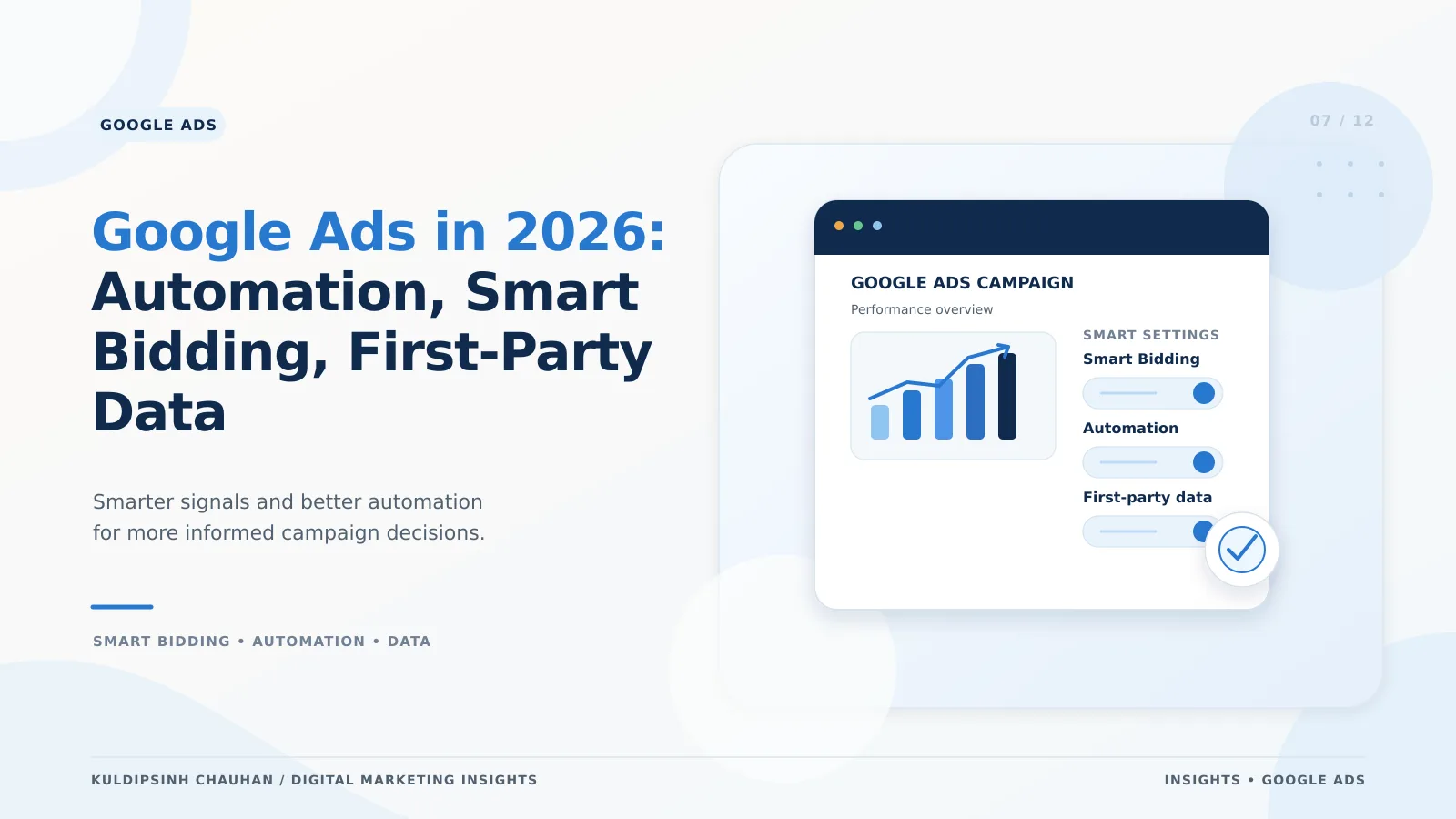
Smart Bidding uses machine learning to set bids for each auction based on signals such as device, location, time, audience lists and query. Broad match, Performance Max and AI Max for Search extend automation to targeting and creative.
What automation cannot do is decide what counts as success for your business. If your conversion action is a page view or a form spam submission, the system will efficiently buy more of it.
Choosing a Smart Bidding strategy
- Maximise conversions - spends the budget to get the most conversions. Good starting point for lead generation with limited history.
- Target CPA - aims for an average cost per conversion. Use once you have consistent conversion volume.
- Maximise conversion value - spends the budget to get the most value. Requires conversion values.
- Target ROAS - aims for a return on ad spend. Best for eCommerce with reliable revenue tracking.
Set targets from actual recent performance, not wishes. A Target ROAS far above history will choke delivery. Change targets in modest steps and give the system time to adjust - Google recommends waiting for enough conversions before judging.
Feeding it first-party data
Enhanced conversions
Enhanced conversions send hashed customer data (such as email) collected on your conversion page, which Google matches to signed-in users. This recovers conversions that cookies alone miss and improves bidding.
Offline and CRM conversions
For lead generation, import what happens after the form: qualified lead, booked call, closed sale. Bidding can then optimise for leads that turn into revenue rather than any form fill.
Customer Match
Upload customer lists to use as signals, exclusions or audiences. Existing customers can be excluded from acquisition campaigns or targeted with retention offers.
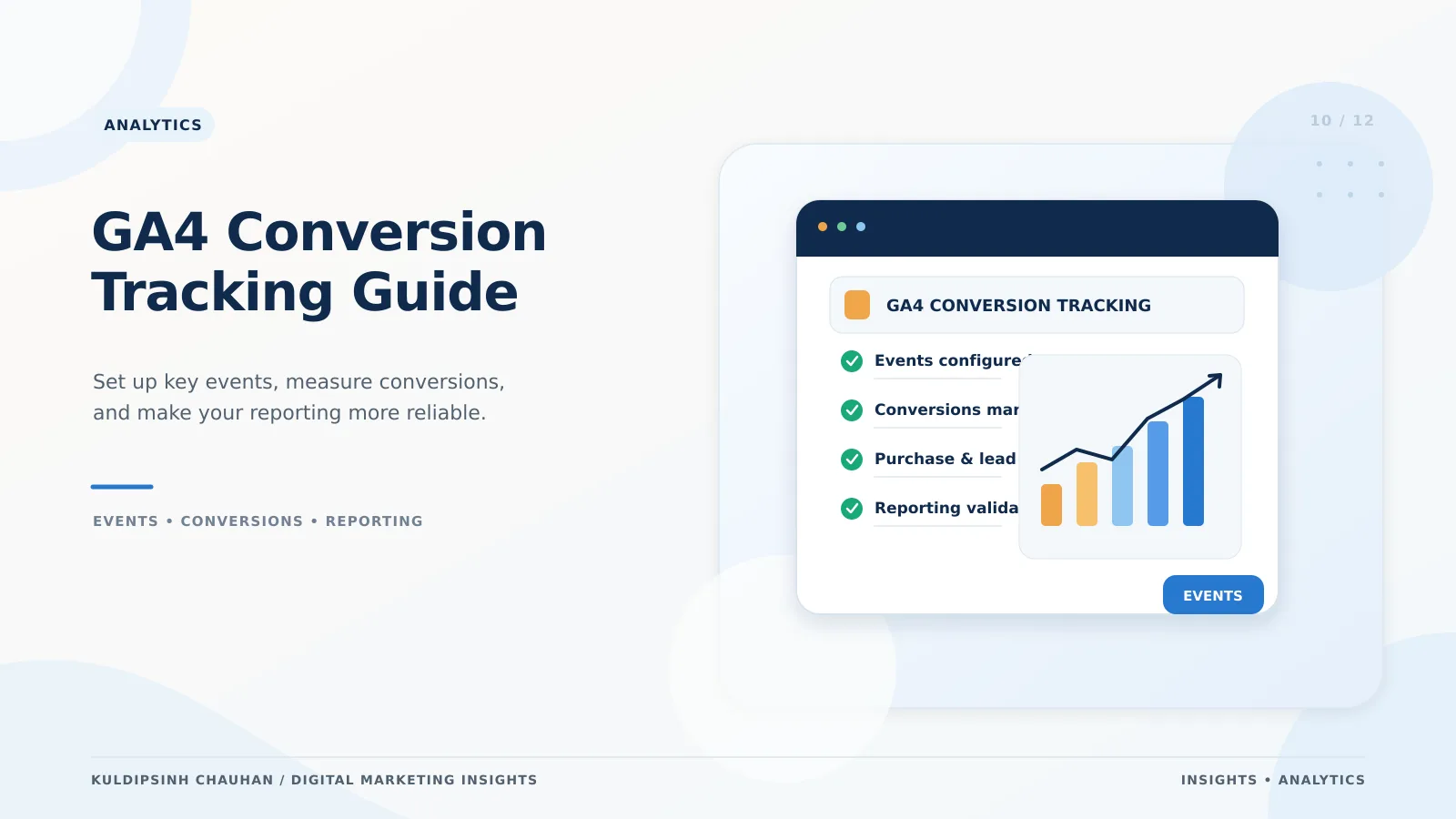
All of this depends on accurate tracking. The setup is covered in the GA4 conversion tracking guide.
Conversion quality: the real optimisation
- List every conversion action in the account and mark which ones represent real business outcomes.
- Set only those as primary goals; keep micro-actions (scrolls, clicks, page views) as secondary for observation.
- Assign values: actual revenue for sales, estimated value per lead stage for lead generation.
- Filter spam and duplicate leads before importing them.
- Review search terms and placements regularly; automation still benefits from negative keywords and brand exclusions where appropriate.
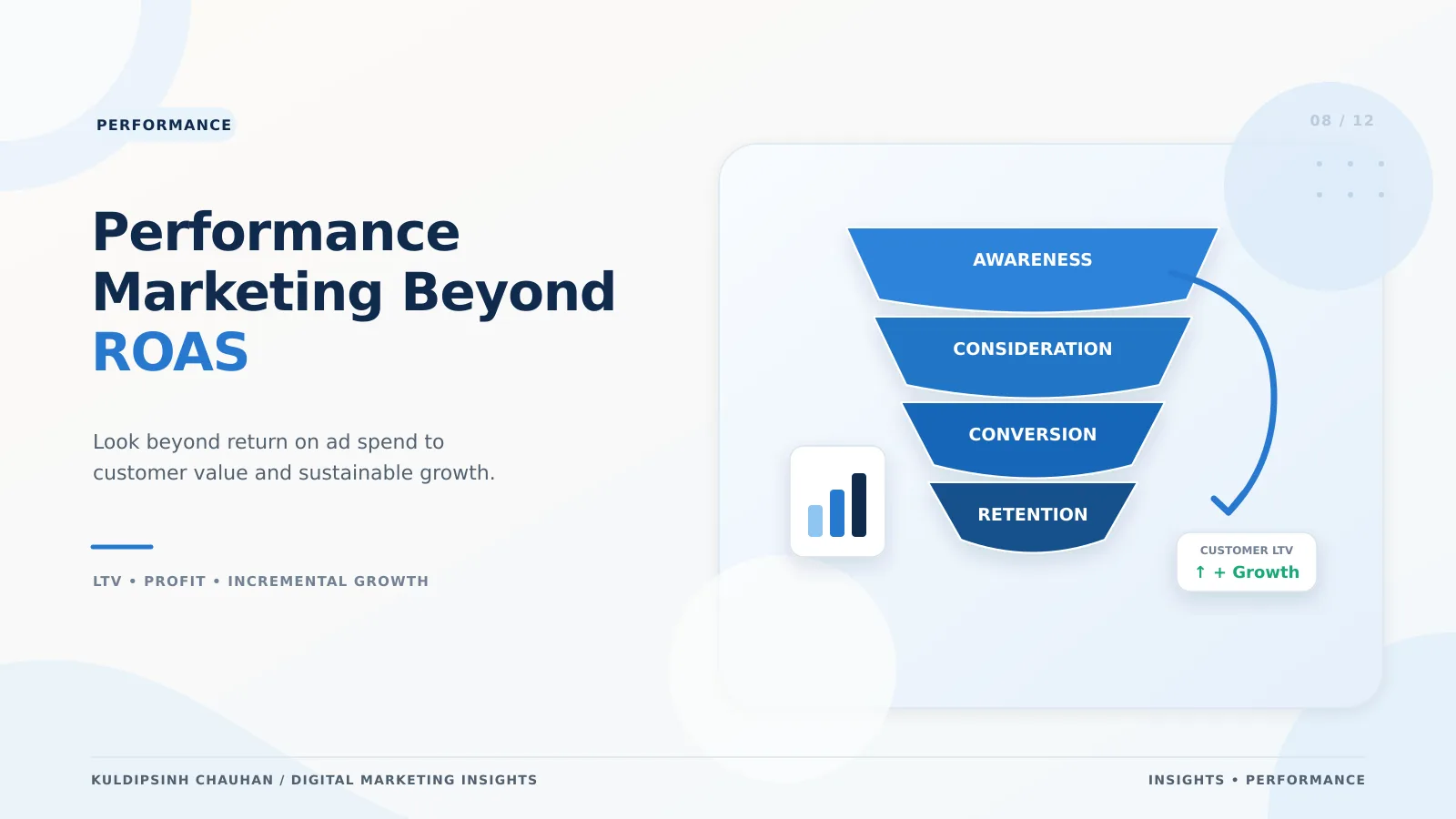
This is also why ROAS alone can mislead - see performance marketing beyond ROAS.
Structure for automated campaigns
- Fewer, larger campaigns give bidding more data; split only where budgets, goals or margins genuinely differ.
- Separate brand and non-brand search so you can see true acquisition performance.
- For Performance Max, keep product feeds clean and use asset groups that match real product or audience themes.
- Use landing pages that match intent; strong organic pages often serve paid traffic well too.
Example from client work
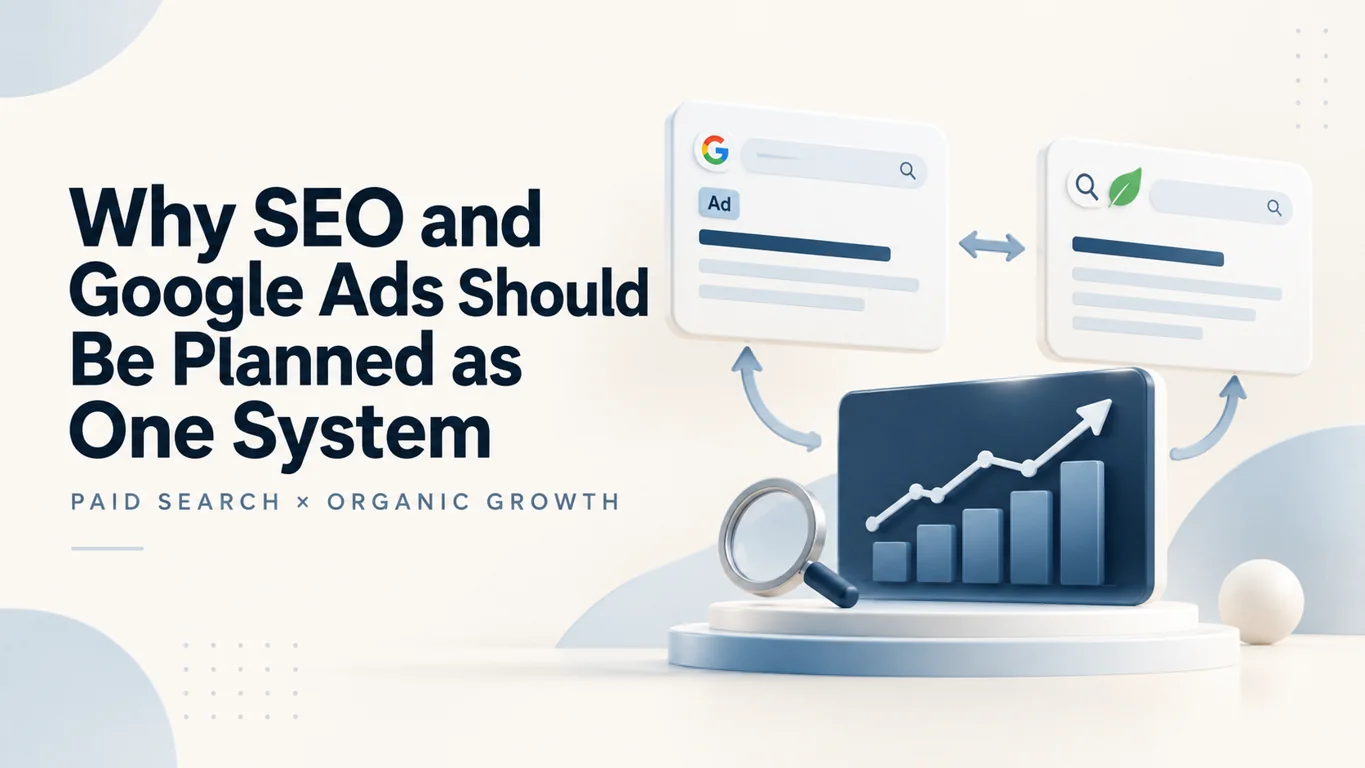
For PGH Apparel, a US streetwear brand, Google Ads and eCommerce SEO were run together from launch, reaching 6.7x Google ROAS. The joint approach is described in why SEO and Google Ads should be planned as one system.
Common mistakes with automated campaigns
- Counting micro-conversions such as page views or button clicks as primary goals, so bidding chases cheap, low-value actions.
- Changing targets, budgets and conversion settings at the same time, which makes it impossible to see what caused a change.
- Judging a new strategy after a few days, before it has enough conversions to learn.
- Letting brand traffic mix with prospecting, which makes overall ROAS look healthier than acquisition really is.
- Ignoring search terms and placements because automation 'handles it'. Exclusions still matter.
- Running Performance Max with a messy product feed - missing attributes, poor titles, wrong prices.
A useful habit is a short weekly review: conversion volume and value, search terms, top assets, landing page performance and any tracking alerts. Make one change at a time and note it in a change log.
Automation rewards patience and clean inputs. Most underperforming accounts are not short of features; they are short of accurate conversion data and consistent structure.
Frequently asked questions
- How many conversions does Smart Bidding need?
- More is better. Google's guidance varies by strategy, but target-based strategies work best with steady monthly conversion volume. With low volume, start with Maximise conversions or consolidate campaigns.
- Are enhanced conversions worth setting up?
- Usually yes. They improve measurement where cookies are limited and give bidding more accurate data. Make sure your privacy notice and consent setup cover it.
- Should I still use manual CPC?
- Rarely. Manual bidding can help in very small or tightly controlled accounts, but most advertisers get better results from Smart Bidding with good conversion data.
References and further reading
- About Smart Bidding - Google Ads Help
- About enhanced conversions - Google Ads Help
- About Customer Match - Google Ads Help
- New AI Max features: build ad campaigns more efficiently - Google Ads & Commerce Blog
- Google Ads
- Smart Bidding
- Enhanced Conversions
- First-Party Data
Related case studies
Want this applied to your brand?
Let's Talk